



Thrift Shopping for Beginners: How to Spot Quality Clothes in 30 Minutes
A practical beginner's guide to thrifting clothes fast: how to test fabric by touch, read seams and labels, check fit, and leave with pieces you'll actually wear.
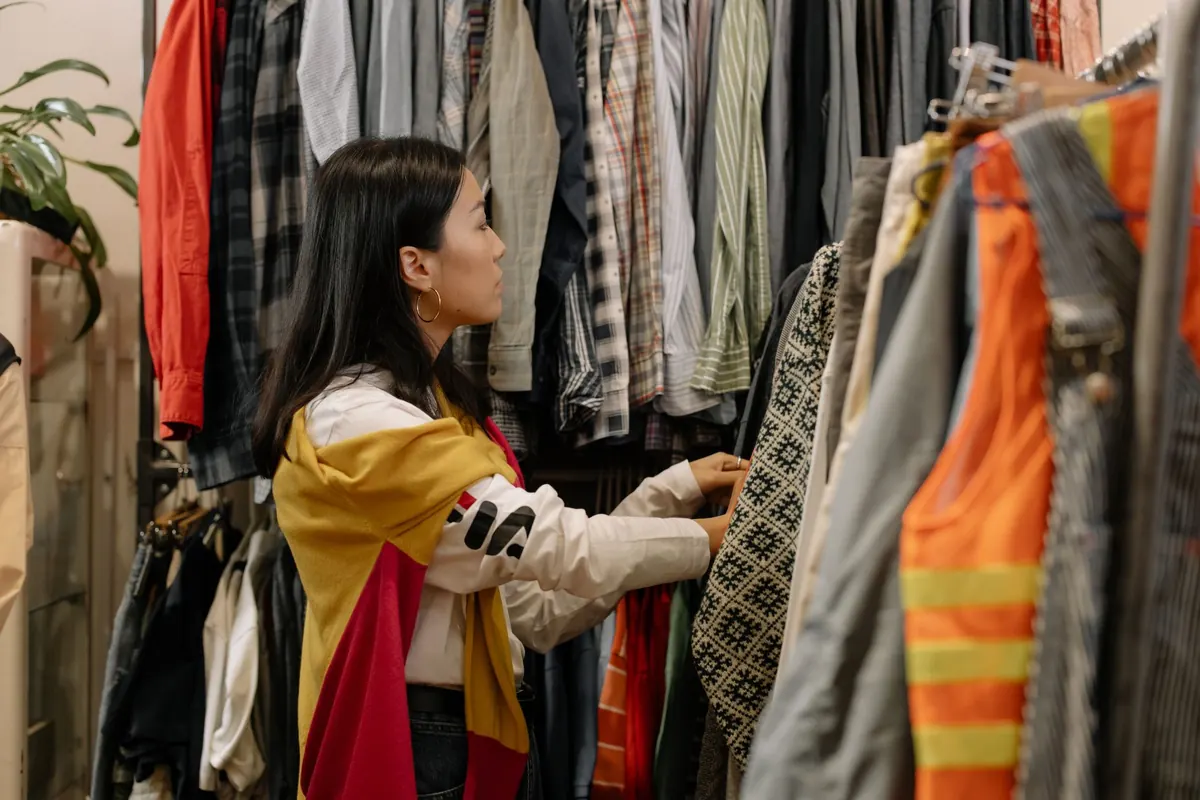
Thirty minutes in a thrift store is either a good scavenger hunt or a slow defeat. The difference is whether you spend that time touching fabric and turning garments inside out, or flipping through hangers hoping something jumps out. Racks are dense, the lighting is unkind, and much of the stock is worn in ways that only show up in daylight. Here is a working method for sorting the good from the tired before your parking meter runs out.
Start With Your Hands, Not Your Eyes
Scanning racks visually is slow, because every hanger looks like a possibility. Touching is faster. Walk a section with your hand trailing along the shoulders of the garments and stop only when something feels substantial. Cotton, linen, wool and silk feel cooler and drier against the palm than most synthetics, which tend to feel slick or slightly warm. Synthetics aren't automatically bad — a good blend resists wrinkles, and technical fabrics belong on activewear — but thin polyester and acrylic are the two fibers most likely to pill, stretch out and hold onto smells.
A few tests take seconds each:
- Rub test. Pinch a sleeve between your thumb and fingers and rub for ten seconds. If little balls of fiber start forming, that's what the whole garment will look like after a month of wear.
- Light test. Hold the fabric up to a window. If you can see your hand clearly through a sweater knit, it's thin enough to show every bump and won't hold its shape.
- Recovery test. Stretch a ribbed cuff or waistband gently and let go. Good elastic snaps back. Tired elastic stays stretched, and no amount of washing fixes that.
Store lighting flattens everything, so if a garment matters, carry it toward the front windows or shine your phone flashlight through it. Stains, thinning and fading hide under fluorescent bulbs.
Turn It Inside Out Before You Fall for It
Construction is where cheap clothing gives itself away, and it's all on the inside. Flip the garment so you're looking at the seams and read them the way you'd read a face.
What you want: stitching that runs straight and even, with no puckering along the seam line, no skipped stitches, and thread tails trimmed rather than left dangling. Seam allowances should be finished in some way — serged (the overlock stitch that looks like a braid), bound, French-seamed on sheer fabrics, or flat-felled on denim and button-down shirts. Raw, fraying edges inside a shirt mean shortcuts everywhere else.
Then check the places that fail first: underarm seams, the crotch of trousers, the back of a collar, the fabric behind buttonholes and belt loops. Hold them to the light. Thin patches, a shiny pressed-flat look and tiny pinholes are all signs a garment has already lived a full life.
Hardware is quick to judge. Zip the zipper all the way up and down; it should glide without catching or splitting. Buttons should be sewn on with a little thread shank rather than flat against the fabric, and buttonholes should be densely stitched. A missing button is a two-minute fix. A broken zipper on a lined jacket usually isn't worth the trouble.
Labels: Read Them Like a Contract
The fiber tag tells you what upkeep you're signing up for. Natural fibers breathe and age well but wrinkle; synthetics hold shape but can pill; blends split the difference. More important than the fiber is the care instruction, because the honest question isn't "could I dry clean this?" but "will I?" If the answer is no, put it back and save yourself the guilt.
Size labels lie, especially on older garments — vintage sizing runs smaller than modern sizing, and a size 10 from decades ago is not a size 10 today. Keep your own numbers in your phone: chest or bust, waist, hip, inseam, and the shoulder-to-shoulder measurement of a jacket that already fits you. A tape measure in your bag settles arguments with a label in seconds.
If you have to talk yourself into it in the fitting room, you'll talk yourself out of it in the mirror at home.
The 30-Minute Route Through the Store
A time limit is what keeps thrifting from turning into a two-hour mood. Give yourself a route and stick to it.
- Minutes 1–3: Set a target. Decide what you actually need — a winter sweater, work trousers, a plain white shirt — and pick two or three sections to visit. Not the whole store.
- Minutes 4–14: Scan by touch. Move quickly along the racks, feeling fabric, pulling only garments that pass the rub and recovery tests. Cap yourself at around eight items. A full cart means a long fitting room and worse decisions.
- Minutes 15–22: Inspect inside out. Do this in one pass under the best light you can find. Reject anything with worn stress points, a broken zipper, or a care label you won't follow.
- Minutes 23–30: Try on and decide. Start with your strongest candidates, and put anything back the moment it fails a fit check. Leave rather than starting a second lap.
Fit Checks, and What to Put Back
Fit checks that take ten seconds each
Start at the shoulders. The shoulder seam should sit at the edge of your shoulder — a tailor can take in a waist or shorten a hem, but rebuilding shoulders rarely ends well. Then raise your arms overhead, sit down, and cross your arms. Anything that binds, rides up or cuts into your armpit will keep doing it. For trousers, squat gently: if the waistband gaps or the seat pulls tight, the fit is wrong, not the size. Confirm you have about two fingers of room at the waist and can sit comfortably without the fabric straining. If a piece needs more than one alteration, add that work to the real cost before you decide.
Put it back if
- It smells like mildew, cigarettes or heavy perfume. Those odors are stubborn and often return in the wash.
- The fabric is thin, shiny or pilled at the elbows, knees, seat or collar.
- It needs dry cleaning and you know you won't do it.
- You're buying it for a version of your life that hasn't happened yet — the dress for an event you haven't been
Photo: cottonbro studio / Pexels