


The Realities of Modern iGaming: Beyond the Flashing Lights
Let’s be honest: the gap between how iGaming is portrayed in pop culture and how it actually works is wider than the Grand Canyon. We’ve all seen the…
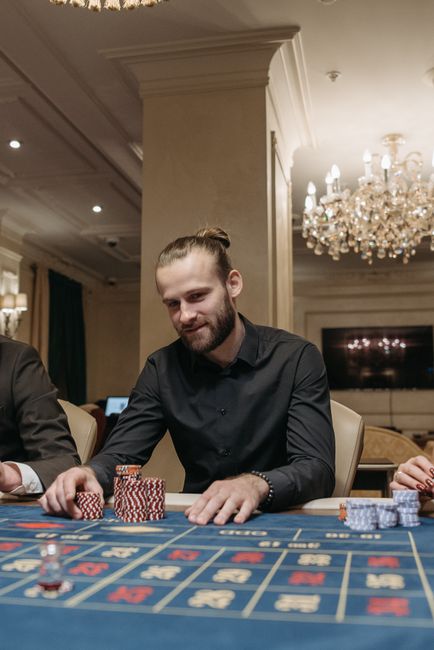
Let’s be honest: the gap between how iGaming is portrayed in pop culture and how it actually works is wider than the Grand Canyon. We’ve all seen the movies—the high-roller in a tuxedo, the dramatic slow-motion card flip, the neon-lit slot machine that pays out a jackpot on a single pull. But if you’ve spent any real time in the digital gambling sphere, you know the truth is far more nuanced. It’s a blend of psychology, mathematics, and high-speed technology. Whether you’re spinning reels, grinding a poker table, or sweating a parlay, the landscape has shifted dramatically in the last five years. Here is a grounded look at what’s really happening in the industry today.
The Evolution of the Slot Machine: It's Just Code Now
Gone are the days of physical reels and mechanical levers. Today’s slots are sophisticated software programs running on Random Number Generators (RNGs). Every spin is independent of the last, and the idea that a machine is "due" for a win is the biggest myth in gambling. The math doesn’t care about your feelings or how long you’ve been sitting there. You can read more about it on L'Avenue Dubai.
What has changed, however, is the volatility. Developers now design games for different types of players. High-volatility slots might pay out rarely but offer massive multipliers, while low-volatility slots offer small, frequent wins to stretch your bankroll. If you don’t understand the difference, you’re playing blind.
Another massive shift is the "Megaways" mechanic. Instead of fixed paylines, these games can generate up to 117,649 ways to win. It creates a chaotic, dopamine-heavy experience that feels incredibly rewarding. But remember: the house edge on most video slots sits between 2% and 10%. The flashy graphics are fun, but they don't change the math—they only hide it.
Poker: The Thinking Player's Game in a Fast-Paced World
While slots are pure chance, poker remains a game of skill played against other humans. The rise of online poker fundamentally changed the game. We saw the "Moneymaker Effect" in 2003, which turned poker from a niche hobby into a global sport. Now, we’re in the era of solvers and GTO (Game Theory Optimal) play.
Here is the reality: the days of easily beating low-stakes games are largely over if you aren’t studying. Recreational players are still out there, but the gap between a casual player and a reg (regular) has never been larger. If you want to win today, you have to understand range construction and pot odds.
- Bankroll Management: Never buy into a game you can’t afford to lose 20 times over. For cash games, 30 buy-ins is a safer standard.
- Position Awareness: Playing from the button is the most profitable seat at the table. Play tight from early position.
- Tilt Control: The emotional leak is what kills most players. If you’re angry, log off. The game will be there tomorrow.
Sports Betting: The Data Revolution
Sports betting has moved from handwritten tickets at a Vegas window to a high-tech financial market. The growth of legalized sportsbooks in the U.S. and Europe has created a frenzy, particularly around the NFL and English Premier League. But if you’re betting based on "gut feeling" or favorite teams, you’re paying a tax to the sharps who are betting on data.
Modern bettors aren't just watching games; they are tracking Expected Goals (xG) in soccer, analyzing pace of play in basketball, and monitoring injury reports seconds before tip-off. The sportsbooks use sophisticated algorithms to set lines, and the house edge is baked into the odds (the vig).
Value betting is the key concept here. You aren't trying to predict a winner; you are trying to find a price that is higher than the true probability. If you think a team has a 50% chance to win but the odds imply a 42% chance, you bet. It’s boring, it’s mathematical, and it’s the only way to survive long-term.
Understanding the House Edge and RTP
This is the part that the flashy ads never talk about. Every game in a casino—online or brick-and-mortar—is designed to make a profit for the operator. This is the House Edge.
For example, American Roulette has a house edge of 5.26% (due to the double zero). European Roulette cuts that to 2.70%. Blackjack, with basic strategy, can have a house edge as low as 0.5%. Slots vary wildly, but a standard online slot might have an RTP (Return to Player) of 96%.
What does that mean? It means over millions of spins, the machine keeps 4% and pays back 96%. The critical mistake players make is thinking this applies to their individual session. You could hit a 1000x win in five spins, or you could lose 100 spins in a row. RNG games have no memory, and variance is a cold, hard reality.
The Rise of Live Dealer Experience
One of the most engaging developments in the iGaming niche is the live dealer format. It combines the convenience of digital betting with the human interaction of a real casino. You log on, and there is a real person dealing cards in a studio.
These studios are heavily regulated and streamed in HD. The real appeal isn't just the cards; it's the social aspect. Players can chat with the dealer and others at the table, replicating the camaraderie of a physical casino without the travel. Games like Live Lightning Roulette and Live blackjack are particularly popular because they offer a broadcast-style experience with the comfort of your own home.
Responsible Gambling: The Reality Check
No article on iGaming is complete without addressing the elephant in the room: addiction. Gambling is not a way to make money; it is an entertainment product. The moment you treat it as an income stream, you have already lost.
Always set deposit limits before you start playing. Use the tools the industry provides—timers, reality checks, and self-exclusion if things get out of hand. The house always has an edge; you are paying for the entertainment, not buying a guaranteed return.
Finally, remember that the glamor of the win is the marketing. The grind of the loss is the reality. Enjoy the thrill, but keep your feet on the ground.